1/5/2026
| SHARE
Posted in Canadian Economy and Interest Rates by Vanguard Realty | Back to Main Blog Page
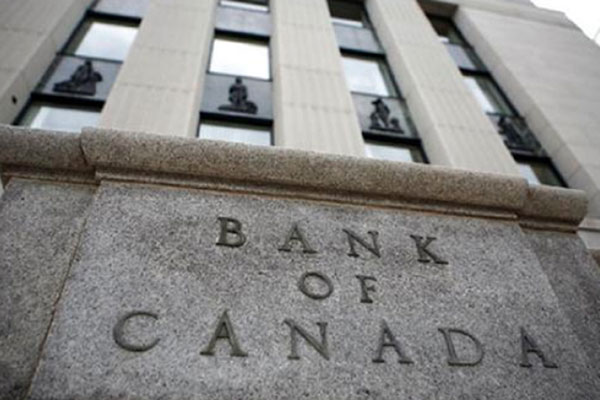
The Bank of Canada appears to have reached the end of its cutting cycle as 2025 drew to a close, a shift that carries clear implications for mortgage borrowers heading into 2026.
The policy rate sits at 2.25%, a full percentage point below its level a year earlier after four quarter‑point reductions, with the central bank signalling that this setting is “at about the right level” to balance growth and inflation.
That stance aligns with BMO Capital Markets’ view that the Bank’s easing phase has largely run its course, even as earlier cuts continue to filter through to households.
“The economy will also benefit from last year's 100 bps of rate cuts from the Bank of Canada,” said Sal Guatieri, senior economist and director economics at BMO Capital Markets.
“However, with rates now at the low end of neutral and inflation still moderately above target, the easing cycle is probably over. Nevertheless, we don't see the Bank reversing gears this year.”
For mortgage professionals, that points to a more stable, but not dramatically cheaper rate environment.
Economists have also projected that borrowing costs would likely hold broadly steady through 2026, suggesting that the era of rapid relief for variable-rate borrowers has passed even as fixed rates face the possibility of modest upward pressure over time.
Guatieri framed that outlook against a Canadian economy that has slowed but avoided outright contraction.
“The best that can be said about Canada's economy in 2025 is that it likely skirted a recession, thanks to the duty-free status of USMCA-compliant goods, supportive fiscal and monetary policies, and the TSX's blistering 28% rally,” he said.
He cautioned that “real GDP growth likely slowed to 1.7% from 2.0% in 2024,” with output up just 0.8% on a Q4/Q4 basis compared with a 3.1% surge the previous year.
Housing risks remain highly regional. “Home price risks remain contained to Ontario and British Columbia, where affordability (though improving) remains poor,” Guatieri said.
He points to a “glut of unsold condos and a surge in purpose-built rental construction” in the Toronto area, exacerbated by tighter immigration settings.
Still, he expects prices in those provinces to stabilize as long as mortgage rates stay near neutral and the jobless rate, which BMO projects to peak near 6.8%
Elsewhere, Guatieri said, modest gains are likely, with currently hot markets such as Quebec City, St. John’s and Moncton expected to cool back toward more typical appreciation.
For brokers and lenders, the bigger swing factor this year may be the looming review of the Canada–United States–Mexico Agreement, which BMO warned could cast “a longer shadow on business confidence and investment” and, in a worst‑case breakdown, tip Canada into a moderate recession.
Source: Canadian Mortgage Professional
Bank of Canada, Bank of Canada Benchmark Rate, Interest Rates, Mortgage Rates Canada, Variable Rate Mortgages